

THE GAME PLAN

Buckminster Fuller said, "In order to change an existing paradigm, you do not struggle to try to change the existing problematic model. You create a new model and make the old one obsolete."
Elderly is an existing paradigm.
Elder is a paradigm that renders 'Elderly' obsolete.
Therefore, Elder could be considered a disruptive technology. And yes—it will disrupt. Disruption: a force that overturns the status quo and forces new patterns to emerge.
Inside the current cultural paradigm of Elderly lies isolation, marginalization, uselessness, depression, despair—shackled to a long, heavy chain. Its impact on joy, well-being, equanimity, and peace is soul-crushing.

TO SHIFT THE PARADIGM
Our approach to shifting the paradigm from "Elderly" to "Elder" is one of "distinction." Distinction is a mental line drawn with words: This is this, that is that.
Distinctions don't just describe reality, they create it. Once you have the word and its meaning, you can see it, talk about it, act on it, and make choices around it.
Without distinguishing between Elder and Elderly, Elder is just another in "the aging blur."
Part of this blur is ageism. Ageism exists, deeply embedded in our culture. Ageism is prejudice or discrimination against people based on their age, targeting older adults. Ageism assumes and asserts that older adults are less capable, relevant, or valuable.
However, once we understand what distinguishes an Elder from the Elderly, we discover something remarkable: Elders relate and interact with ageism differently than the Elderly.

AGEISM AND THE ELDER
Elders aren't shaped by, reactive to, trying to prove it wrong, nor denying its existence. Ageism is here. And it's here to stay for a long time to come.
Ageism is constantly culturally enriched. Stay young, make money, go faster, me-or-you culture enshrines ageism.
Ageism is embedded in the culture's narratives, undisputed norms, attitudes, institutions, and superstitions. Everywhere, all the time. Never questioning where that information came from and how it got there. But baby, it's here and it's here to stay.
It's Elder's discovery that reshapes the way an Elder perceives ageism. The discovery that growing old is a rare creative space that can only be entered with enough life experience that comes with age.
Elders learn to let go of the hand-me-down thoughts about growing old. They can now pick their own thoughts. No need to 'think what others think, hoping to fit in or get agreement.
So how Elders handle ageism is that it's there, it's rock-solid, and so what. They don't need to respond to it. They don't fall for what others believe, it's what they now believe that counts.
But who are these people capable of such transformation? Who possesses the qualities needed to make this leap from older to Elder?

CHECK AND SEE: ARE YOU A CANDIDATE TO BECOME AN ELDER?
Admission to Elder only requires one attribute.
Einstein said, "Wisdom is not a product of schooling but of the lifelong attempt to acquire it."
That's your admission test.
Those who can leap older to Elder, when they examine their lives, have always been wisdom seekers.
Knowledge seekers were aplenty—chasing facts, techniques, and information—but wisdom seekers pursue understanding, context, and the "why" behind life. Wisdom seekers are drawn to abstractions, not explanations, assessments, or chatter.
Check and see if sometime in your middle-aged years, you began to ask yourself those "why" questions about yourself. You began to earnestly explore how you think, how you express yourself, and how you do or do not do things. Self-understanding became important to you. An undisputable sign of a wisdom seeker.
My estimate, based on the criteria that seeking wisdom is quintessential, is that there are roughly 12 million wisdom seekers at the door of the Elder. That's 20%, out of 59 million over 65. (I used the 80/20 rule.)
That's all we need for Elders to make an impact. The numbers validate this assertion—and they point to an extraordinary possibility.

The Power of Small Numbers
The 12 million over 65 is 3.6% of the U.S. population. – U.S. Census Bureau, 2024
3–5% can shift social norms. Small, committed fractions, networked and consistent, alter society. – Centola, Becker & Macy, 2018
5% can reshape culture. Confident, persistent minorities rewrite rules and shift society. – Xie, Sreenivasan, Korniss et al., 2011
Small, committed groups make the impossible inevitable. – Gladwell, 2000
Great change doesn't start with the masses—it starts with a few who are persistent, clear, and fearless. – Marc Cooper, 2017
Small numbers can have a significant impact. But only if they're connected. Only if they form a network.

THE GAME PLAN - THE ELDER NETWORK
After 45 years of work, I've learned to see and bring together individuals and groups, forming structures that didn't exist but now function within various industries and cultures, including hospitals, dentists, therapists, small businesses, psychedelic facilitators, lawyers, and senior executive leadership groups.
One model I trust in my thinking is to look at an industry as a network of conversations. Individuals, relationships, groups, and organizations are networks of conversations.
The image is nodes in a network, some big, some small, but ultimately all interconnected. Some links are wide open, others are narrower, and some are just dot-lines. But they are all connected.
A decade ago, Elder nodes were sparse in the network, somewhat distant, and isolated. Today, they are dense, frequent, and accessible. Given the current technological ability to build networks, building an Elder network is now conceivable. There is sufficient volume, density, and available connectivity to generate a more unified and stronger voice that would garner attention.
This network positions Elders not as honorary titles, but as roles with real weight in arenas that are adrift. As a network, Elders will be heard.
The time for this network has arrived. The conditions are right. The moment is now.

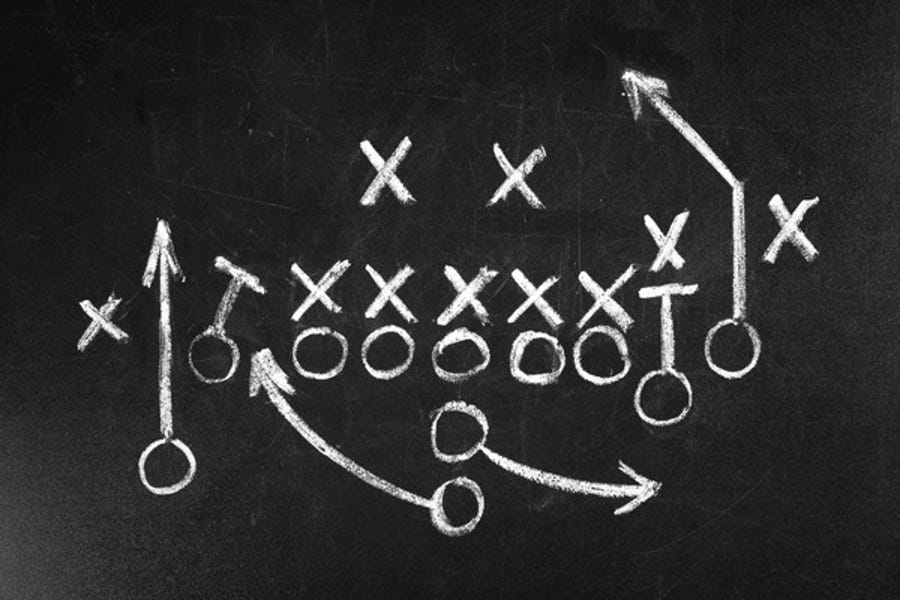
NOW ON THE CHALKBOARD
Enough people, groups, and communities are now committed to the tenets, concepts, and distinctions of Elder to generate a collaborative network. Autonomy preserved, collective power enabled.
The Elderly to Elder Webinar is this beginning. Five Elders, men and women, veterans and new recruits, to have a conversation on the difference between the Elderly and the Elder and what being an Elder provides for them.

QUESTION AND COMMENT
How do you want to grow old? There is a choice. Elderly or Elder?
Ian, my teacher, once said Wisdom lives in the listener. It can only be heard when you have it.
Thank you Marc. I sometimes think that wisdom can be like the geodesic dome that Buckminster Fuller so loved...a framework, a protective structure of wisdom to care for those beneath it and around it. Thank you for your wonderful work here.