

THE DISTINCTION ELDER
No distinction, no power.

[6-minute read]
No distinction, no power.
First, What Is a Distinction?
A distinction is a way of seeing something that wasn’t available to you before.
A distinction is not more information. It’s not data. It’s not an opinion.
A distinction changes the way the world shows up, the way the world occurs for you.
When a distinction lands, you don’t just understand something, you now perceive it. And once perceived, you can’t “unsee” it.
When a distinction occurs, it is instantaneous. Not just intellectually comprehended but intuitively, existentially, and somatically felt.
A distinction gives shape to what was previously vague, hidden, or collapsed into something else.
A distinction expands your awareness and enables you to act where before you were blind.

The Power of Distinction
The power of a distinction is simple:
With just one distinction, an entirely new way of being arises.
New openings for action appear. Old, automatic patterns fall away.
No effort. No willpower. Just clarity is all that is required.
The power of distinction is it doesn’t force change; it permits it. It allows, licenses, enables the unseen to be seen – instantaneously.
A distinction reveals choices you didn’t know existed.
A distinction breaks the spell of cultural conditioning.
A distinction breaks the influence of family, peer and national beliefs.
A distinction converts reaction into deep understanding.
A real distinction doesn’t add anything — it removes the blinders.
And once the blinders drop, you don’t try to live differently… you are different and therefore life is different.

Distinction: A Phenomenological Event
Most people think a distinction is intellectual — a clever insight, a new concept, a mental upgrade. It isn’t. A real distinction is a phenomenological event: something changes in your experience of the world, not in your theories about it.
You know this because the moment a distinction happens, the world appears differently. Not your opinions — the world.
Before the distinction, everything is collapsed, fused, or invisible. You move through issues in a kind of automatic haze. You’re acting, but you don’t see the underlying structure that you’re acting from.
Then the distinction arrives — clean, sharp, unavoidable — and suddenly the fog lifts. A true OMG. Or if you’re from Philly, a “Holy Sh*t.” What you couldn’t perceive before now becomes blatantly obvious.
This is phenomenology: the study of how reality appears in experience.
A distinction alters how reality appears for you. Your reality about it, him, her, them and more often yourself changes instantaneously.
When you distinguish something, you’re not thinking differently — you’re perceiving differently. When you’re perceiving differently, those aspects of you that determine your perspective also have changed – emotions, thoughts, sensations, beliefs.
When perception shifts, everything shifts all at once. Kaboom!

My Example of a Distinction
Let me give you an example from my life. A distinction that nearly everyone has experienced. I was 14 years old, in 8th grade, attending Leeds Junior High School in Philadelphia. My homeroom teacher was Mrs. Sokoloff. My nickname at the time was “Coop.”
My obsession was my collection of baseball cards. I had two very hard to find cards. They were like “gold.” I had a somewhat rare Mickey Mantle and my hero, Richie Ashburn.
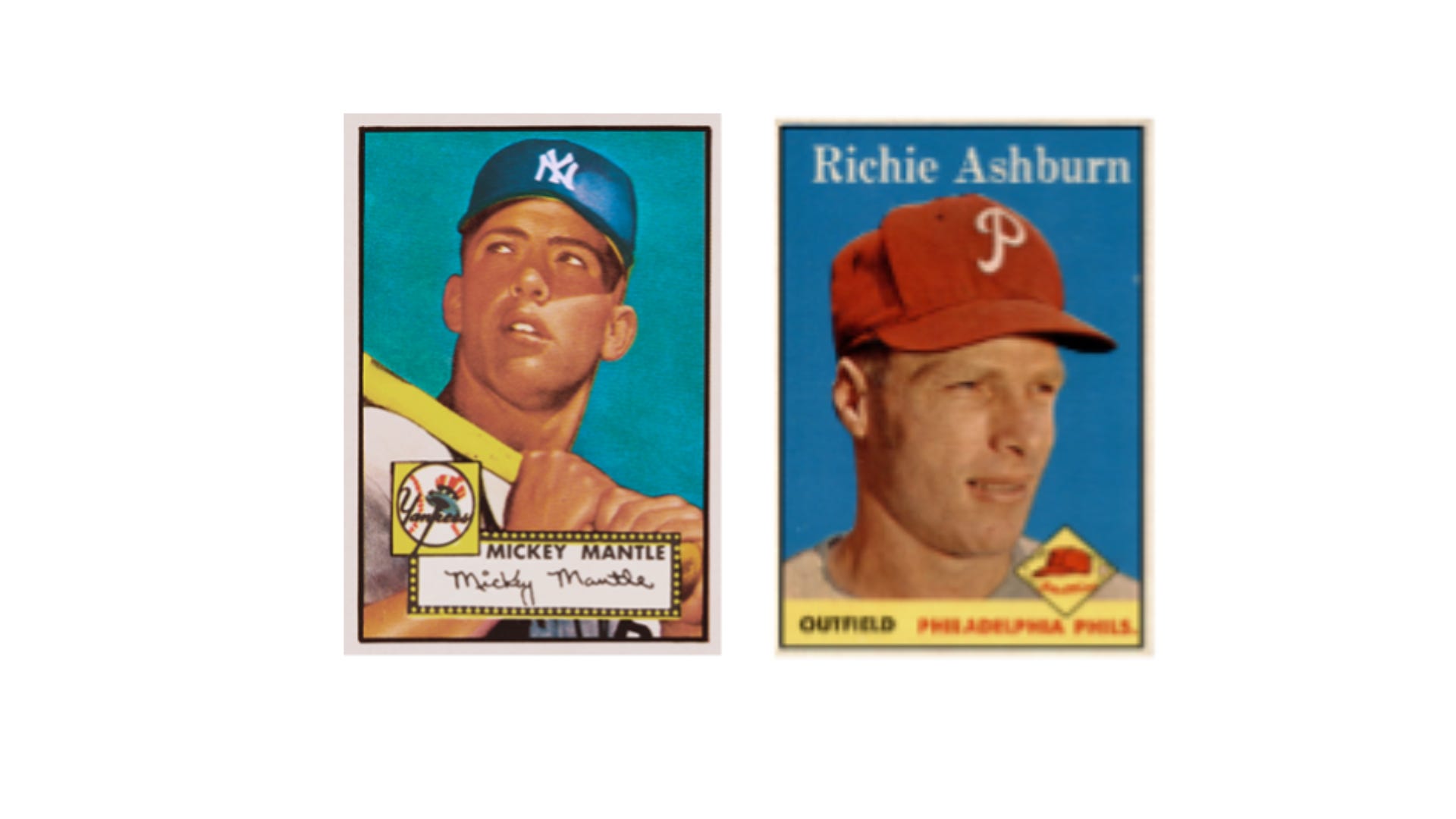
I was not a casual collector; I was an intense possessor. I spent my time collecting, trading, buying, and even gambling for them. Besides school and sports, they were a huge part of my life.
Then, on Thursday, November 12th, 1959, I was in line in the lunchroom. Ahead of me was Cubby Adelman in her angel-blue sweater, bobby socks, saddle shoes, poodle skirt with a long ponytail. About halfway down the line, she turned around, we looked at each other, she smiled at me, and said “hi, what’s your name?”

Shazam!
What baseball cards?
Life, me, the entire world changed in an instant.
That’s how a distinction works. Not gradually. Not theoretically. Instantaneously.
The moment you see what you couldn’t see before, you don’t need to convince yourself of anything. You don’t need to practice the new perspective. You don’t need willpower to maintain it.
You simply can’t go back to not seeing it.
The Distinction Elder
The moment you distinguish “Elder,” growing old changes. Nothing out there physically changes. Your age remains the same, your body is the same, the culture is the same. The face in the mirror is the same. But your experience of growing old is reorganized.
What was once a single, flat category and its concepts now split into two different worlds — one culture-determined, the other self-determined.
That separation isn’t conceptual. It’s experiential.
You feel the difference.
You perceive your life differently.
You stand differently in life.
You speak and hear differently.
You understand differently.
That’s why distinctions have incredible power:
They reorganize the way reality appears, which reorganizes how you act.
Not because you’re trying harder, but because you can now see what was previously unseen.

How the Elder Distinction Occurs
Distinctions are essential because Elderhood isn’t taught — it’s distinguished.
The moment you see the difference between Older and Elder, your way of aging changes.
Elder distinguished is not a belief, it’s an opening. And once opened, you move through life with a level of clarity and freedom that wasn’t available before.
When you distinguish Elder, you now see yourself and the world differently. You have more equanimity, poise, self-understanding with yourself and the world.
You’re suddenly more appreciative, calmer, see deeper into the past and further into the future. Trends and patterns become observable. Calmness, composure, quietness becomes your nature.
When you distinguish Elder, you immediately notice the mind quiets down, roiling emotions subside - jealousy, insecurity and fear loosen their grip. Therefore, your suffering shrinks.

Elder as Cultural Infrastructure
When something becomes both a noun and a verb, it crosses a threshold of cultural power. It stops being just a thing and becomes a behavior.
People don’t “search” anymore — they “Google.” We don’t send messages — we “text.”
Elder has crossed this threshold. Elder is becoming both a noun and a verb.
As a noun, Elder names what you are. As a verb, Elder names what you do.
When a word operates this way, it becomes a universal reference point — something so widely recognized, so baked into culture, that people automatically use it to orient, compare, or act. It becomes the default mental anchor everyone knows.
Elder shifts from a label to a lived pattern, the way a river shapes the land simply by flowing through it.
Once Elder is both the name and the movement, it becomes the current you step into — and the current carries you.

The Opening
Distinction occurs in an instant. It operates like a “Big Bang” — a whole new world and future created in a moment.
When a distinction takes place, you don’t need to remember it.
You don’t need to practice it.
You don’t need to believe it.
That’s phenomenology. And that’s why a distinction, once seen, quietly transforms everything that follows.
Distinctions change everything.

ANNOUNCEMENT
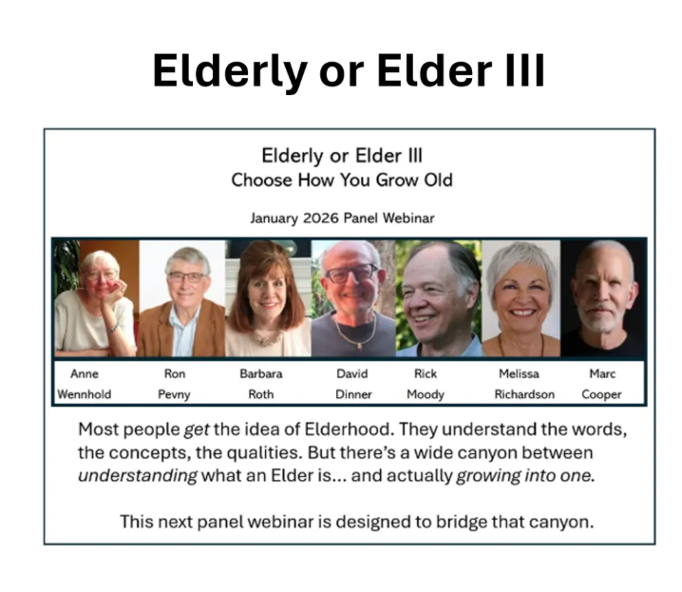
Save the date: Wednesday, February 4th at 11am HST/ 1pm PST/ 2pm MST/ 4pm EST/ and 8am (Thursday) AEDT.
Registrations open Dec 5th.
Now that's a great distinction. Living vs Aging. How perfect.
Looking forward to the panel in February. I want to Live as an Elder rather than age as an Elder. I can’t do anything about aging but I can shape how I live, treat others, and choose to see the world.