

ELDERS, DEATH, AND EARTH
NOT IF BUT WHEN

NOT If BUT When
For an Elder, a shift happens that alters their relationship to death: from conceptual to tangible. The statement “you’re going to die” moves from intellectual understanding to direct experiential knowing. That shifts your thinking of death not as an “if,” but a “when.”
“If” is if something happens, if an accident occurs, if I get sick, if a nuclear bomb is dropped. “If” helps foster a sense of distance from death. “If” puts death in a future temporality – something “out there,” sometime but not now.
But a “when” is totally different. For me personally, my “when,” given my genetic profile and family history, now living in a collapsing environment, in a world of increasing threats, my estimated time of departure is ~92. I’m now 81.
Whether 92 is true or not is inconsequential. Putting it in time makes death real. By this calculation, I have 4,015 days left. So far, I’ve lived 29,565 days; 4,015 is 13.5% of 29,565 days. Makes the time left precious and urgent.
Part of our Elder development work in the enterprise is enabling late agers to move themselves from their “if” to their “when” about death. That shift alters life...how does it alter life as lived?
It simplifies things quickly. Petty concerns lose their grip. Time is no longer something to spend; it’s something to steward. You begin to ask different questions:
What matters now?
What is mine to complete? What am I leaving behind—intentionally, not accidentally?
And the Earth moves from backdrop to responsibility. Less extraction. More care.
Not because you should—but because you see you’re not separate from what you’re about to leave.
EARTH & ME
In this altered relationship with death, your relationship with the Earth is also changed. What’s changed is the illusion of distance.
The Earth is no longer “out there,” a backdrop for a personal life. It becomes the context you are inside of—and responsible for.
Ownership gives way to stewardship. Consumption softens. Conservation becomes important. Urgency sharpens. Time is no longer abstract, so the impact of your living—what you take, what you leave—stops being theoretical.
What’s realized is simpler, and harder to ignore: you were never separate. The air, the water, and the soil are not resources; they are, and always have been, conditions necessary for your existence.
When “when” replaces “if,” legacy becomes immediate. Not a plaque. Not a story. Your footprint.
An Elder doesn’t approach the Earth as something to manage or save in the heroic sense. That’s still ego, just dressed in green. The relationship becomes quieter and more exacting: reduce harm, restore where you can, and refuse indifference.
You begin to act locally, consciously, because that’s where you actually live. You think generationally because that’s what now matters.
Less taking. More tending. And no applause required.
EARTH FUNERAL – MY CHOICE
Return to Nature
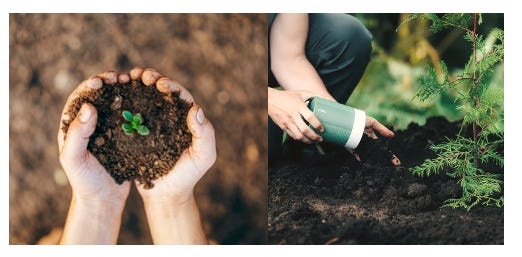
You don’t have much of a choice when and how you die. But you do have a choice after you’re dead. Here’s mine.
I chose Earth Funerals because they tell the truth without decoration. No polishing the story, no pretending we’re separate from where we came from.
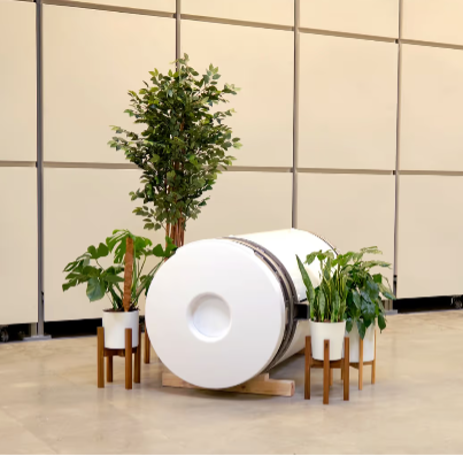
An Earth Funeral is simple: no embalming chemicals, no metal caskets, no sealed vaults. The body is placed in a biodegradable shroud or casket and returned directly to the soil as compost, often in a natural burial ground where the land is protected, not landscaped into a showroom.
Why this? Because at 81, I’m not interested in a final act of insulation. I’ve spent a lifetime taking from the Earth—food, water, space, energy. The least I can do is give something back without making a mess on the way out.
It’s not sentimental. It’s aligned with my being an Elder. Contribution is a strong core value of an Elder. When I go, I go back to where I originated. Cleanly. Quietly. No inert, non-decomposing casket or cremation ashes, just a clean handoff back to the source.
https://earthfuneral.com/our-service
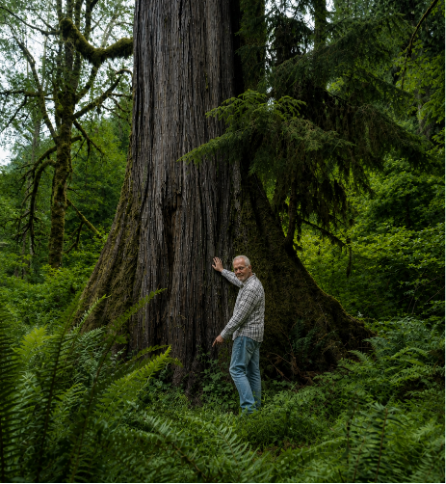
Of my five compost canisters, one will go right there. My compost will break down into humus, the dark, rich, stable material that holds water and feeds soil life. I’ll then be absorbed by a 500-year-old tree. What an incredible future awaits.