

A One-Minute Elder
DEBUNKING THE LONGEVITY OBSESSION:PART III: Longevity - FOLLOW THE MONEY

PART III: Longevity: FOLLOW THE MONEY
There are really two longevity economies operating in the United States simultaneously. One is quiet, scientific, and structural. The other is loud, consumer-driven, and cultural.
On the science side, the U.S. is spending roughly $10 to $15 billion a year to understand and extend the biology of aging. That money flows through federal research—primarily the National Institute on Aging—plus venture capital, biotech labs, and private research groups working on senescence, regeneration, gene therapies, and healthspan medicine.
This is a long game. It doesn’t promise youth. It aims for function, resilience, and time that still works.
On the consumer side, Americans are spending far more—roughly $30 to $60 billion a year—chasing what longevity feels like. That includes anti-aging products, supplements, wellness programs, concierge medicine, diagnostics, and the growing marketplace of “live longer, look younger, perform better” services.
Obviously, the longer you live, the more money they make.
Most of this money isn’t extending lifespan in a biological sense. It’s buying reassurance, control, and the experience of not growing old.
So, the picture is this: billions to change the future of aging and tens of billions to manage the fear of it.
And underneath both economies—quiet science and loud consumption—sits the same uninvited guest: death.
Neither economy addresses it directly. The scientific side works around it, extending function while mortality waits at the end of every breakthrough. The consumer side buries it beneath products and protocols, as if enough optimization might make it optional.
We don’t meet death head-on. We manage it. We soften it with creams, distract it with dashboards, and anesthetize it with promises of “ten more good years” if we just buy the right protocol.
We have turned mortality into a logistics problem, something to optimize, postpone, or outspend.
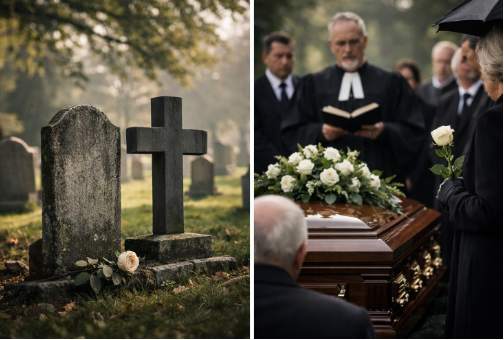
Our culture is remarkably skilled at hiding death in plain sight. We rapidly move it out of our homes and into institutions. We use the words “passing,” “transition,” and “departing” so we don’t have to say the word itself. We celebrate youth as if it were a permanent state rather than a temporary condition.
But death doesn’t disappear because we refuse to look at it. It waits patiently outside the marketplace and our headspace.
This is precisely where the Elder parts company with both economies.
An Elder doesn’t deny death. An Elder doesn’t repudiate death. An Elder stands in it. Elders stay conscious of it. Elders know down to their bones that their time is limited, and the horizon is fast approaching. Not as a defeat, but as clarification.
Because when you stop pretending you have forever, you finally discover how to live as if this moment counts.

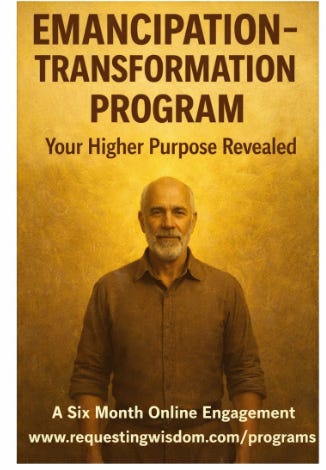
This program aims for conscious liberation from prevailing cultural narratives about growing old.
The program expands the freedom to be and act without being constrained by self-imposed limiting beliefs or external circumstances.
The program empowers participants to discern conditioned behavioral patterns so they can choose rather than react.
The program develops participants’ ability to individualize their AI, learn to optimize their transformational work with it, and make it an active thought partner in their development.
Registration opens June 2026.
I (at 82) love that you tell it like it is, Marc!