

A One Minute Elder
ELDER AS TEACHER

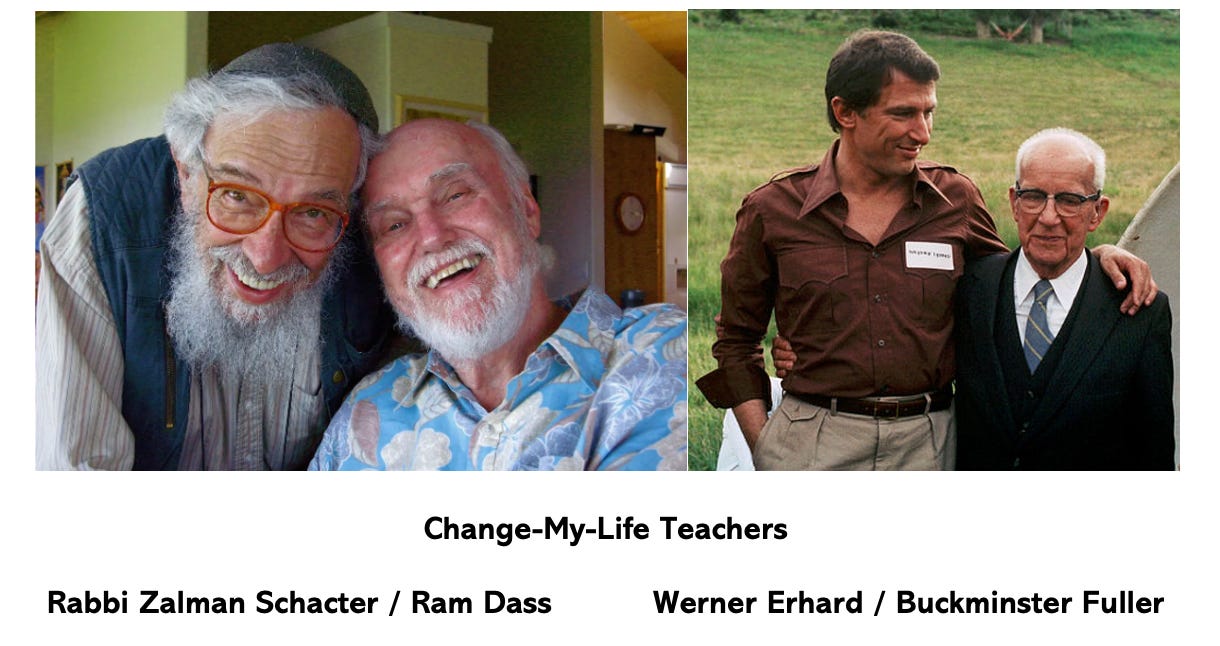
ELDER AS TEACHER
For Elders, a teacher is someone who causes learning.
Causes - triggers, sources, sparks.
Elders become teachers in their own right.
Not simply someone who knows more than another person.
Not someone who transfers information from one head to another.
An Elder teacher does something more consequential: they become a teacher who creates the conditions in which another person can see, understand, discover, and become capable of something that was not previously available to them.
An Elder teacher makes a difference in three fundamental ways:
1. They change what a person can see.
An elder reveals distinctions, possibilities, and perspectives that were previously invisible. Once something is truly seen, it cannot be completely unseen.
2. They change what a person believes is possible.
The best teachers often see capacities and futures in us before we can see them ourselves. Their confidence becomes a bridge between who we are and who we might become.
3. They change who a person becomes.
The deepest teaching does not merely add knowledge. It alters identity. An Elder teacher leaves the student different, not simply knowing more, but seeing differently, acting differently, and being differently.
This is why teachers can remain present in our lives decades after the relationship itself has ended. We may forget the lesson plan. We may forget the book. We may even forget the exact words.
But we remember who we became in their presence.
Perhaps that is the simplest definition:
A teacher is someone whose presence, knowledge, and commitment make another person’s growth possible.
THE BUDDHIST MODEL OF TEACHER
Elders become “teachers” much more in the Buddhist tradition than in the Western tradition.
The difference is profound. In the Buddhist tradition, a teacher is not primarily someone who gives you knowledge. A teacher is someone who transforms your consciousness.
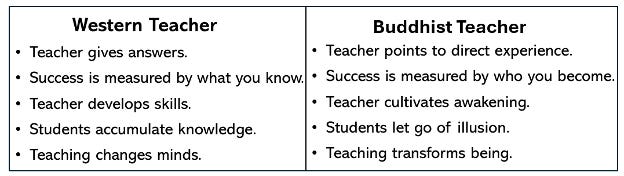
A Buddhist teacher doesn’t merely ask, “Did you understand the lecture?” Instead, they ask the deeper question:
“Did your way of seeing reality change?”
In Zen Buddhism, for example, the teacher often refuses to give a straightforward answer. Instead, they practice inquiry. Socratic, Appreciative, and Wisdom Inquiry
Why? Because the goal is not to fill the student’s mind but to free it from its habitual patterns. To see the pattern, not be the pattern.
The teacher is less like a professor and more like a mirror.
The teacher continually points the students back to themselves.
As one Zen saying puts it:
“The finger pointing at the moon is not the moon.”
The teacher points. The student must see.
An American teacher primarily changes what a person knows. A Buddhist teacher changes the context from which a person knows.
That may be the deepest difference. One teaches content. The other transforms consciousness. And once consciousness shifts, new thoughts, actions, and ways of being arise naturally.
________________________________________________________
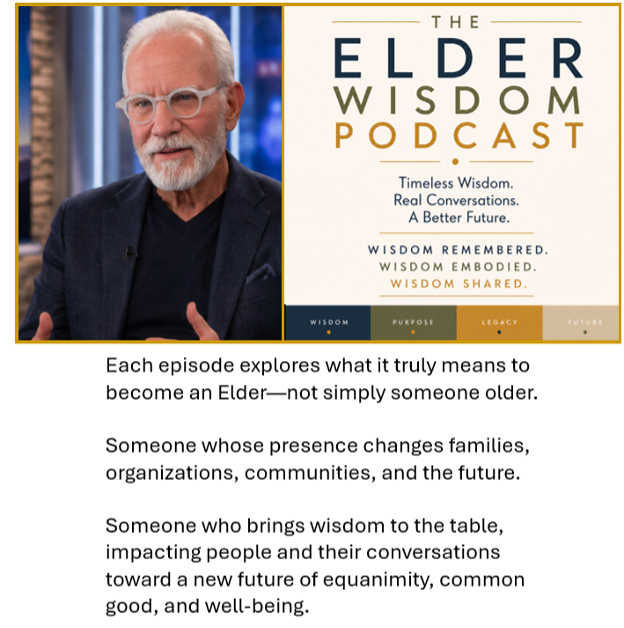
Coming in September 2026.
This really resonates for me, as someone who has spent decades teaching mentoring skills. It’s less about what they learn and more about who they become and how they see themselves. Change that and the rest comes naturally.
Good work Marc. I also look forward to your podcast.