

A One-Minute Elder
MY ASSIGNMENT AS THE KEYNOTE SPEAKER

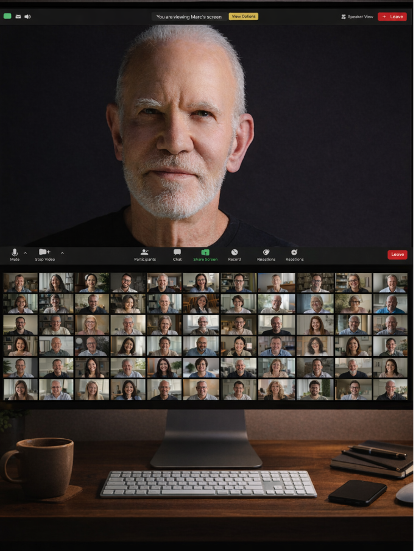
MY ASSIGNMENT AS THE KEYNOTE SPEAKER
I’m getting ready to be in front of a few hundred very capable, very experienced, very smart, very well-rehearsed Zoom adults and talk about something most of them have never seriously considered:
They don’t use language.
They live inside it.
Now, that’s not how they see themselves. They think they choose their words. They think they’re expressing what’s already there. They think language is a tool—like a hammer you pick up and put down.
That’s the illusion.
The older traditions don’t share that illusion.
Take the Hebrew word davar, a five-thousand-year-old term. It gets translated as “word,” which sounds harmless enough. But davar also means thing, event, matter, deed.
Same word.
No separation.
To them, a word wasn’t commentary. It wasn’t a clever description after the fact. A davar was something that entered the world and did something.
It moved reality.
So, when you spoke, you weren’t reporting.
You were acting.
Now hold that next to the opening of the Gospel of John:
“In the beginning was the Word…”
The word there is Logos—the organizing principle of reality. And then it says, “The Word became flesh.”
That’s not subtle.
Not “the Word described what happened.”
The Word became what happened.
So now we’ve got two traditions, thousands of years apart, saying the same thing:
Words don’t sit on top of reality.
They generate it.
And just in case you think that’s a Western religious idea, Buddhism steps in and tightens the screws.
Buddha talks about Right Speech.
Most people hear that and think, “Be kind. Don’t lie. Don’t gossip. Don’t talk politics.” Good advice. Keeps Thanksgiving dinner from going off the rails.
But that’s not the point.
Right Speech is about understanding how what you say conditions how you perceive, and how you perceive becomes the world you live in.
So, if your language is:
“I’m getting old.”
“I’m declining.”
“I should slow down.”
That’s not an observation.
That’s your aging construction project.
And you’re the contractor.
What I find slightly amusing is how confident people are when they say these things. Like they’re just being realistic. Just telling it like it is.
No.
You’re telling it like you’ve been told it is.
And then living into it.
So, when I step into these 75 minutes for my keynote, I’m not there to give them more information. They don’t need more information. Nobody does.
I’m there to interrupt the narrative.
To have them see—clearly, maybe for the first time—that the story they’re living into about growing old isn’t neutral, isn’t inevitable, and isn’t even theirs.
It’s constructed. Maintained. Reinforced.
Word by word.
And once you see that, you’re in a different game.
Because now you can’t pretend your words don’t matter.
You can’t keep speaking the same way and act surprised when the same life shows up.
That’s when it shifts.
Not when you learn something new—
but when you recognize:
Every word you speak is a davar.
It does something. It creates something.
And now the question isn’t what you believe.
It’s simple.
What are you going to create next?


“Changing the Narrative is a blueprint for late life, written by a working Elder—not a theorist. Through brief, pointed reflections, it exposes how the cultural narrative about aging was never yours—and how you can finally author a new one.”
At just 46 pages, this isn’t a project. It’s a sitting. An hour, maybe an hour and a half read, about the length of a connecting flight, where, for once, you don’t distract yourself.
But don’t confuse short with light.
This is not a book you read and move on from. It’s a book that reads you—revealing the assumptions you’ve been living inside, word by word, without ever choosing them.
And if you’re willing, it does something else.
It hands you the pen.
You don’t need more time.
You need a different story.
This is where you start.
Beautifully said Marc. Thank you.